A tidy closet can make daily routines easier, reduce clutter, and help you get more use from the clothes you already own. The key is not just organizing everything once. It is creating a simple system that fits your space and is easy to maintain.
With a few practical habits, you can keep your closet neat without spending hours rearranging it every week.
Start With a Complete Closet Reset
Before adding storage bins or rearranging hangers, take everything out of the closet. Working with an empty space makes it easier to see what you have and clean areas that are usually hidden.
Place clothing and accessories in broad groups, such as:
– Tops
– Pants and skirts
– Dresses and suits
– Sweaters and jackets
– Shoes
– Bags and accessories
– Seasonal items
As you sort, check each item and decide whether it belongs in your everyday wardrobe. Look for clothing that no longer fits, is uncomfortable, needs repair, or has not been worn in a long time.
You do not need to make every decision quickly. If you are unsure about an item, place it in a separate “maybe” group. Revisit that group after the main sorting is complete.
Keep Only What You Use
A closet is easier to maintain when it is not overfilled. Too many items make it difficult to see what you own and can cause clothing to become wrinkled or misplaced.
Consider keeping an item if it:
– Fits well and feels comfortable
– Works with several outfits
– Is suitable for your current lifestyle
– Is in good condition
– You enjoy wearing it
Items that are no longer useful can be donated, recycled, given to someone else, or set aside for repairs. Avoid putting unwanted clothing back into the closet “for now,” since it can quickly become part of the clutter again.
Clean Before You Organize
Use the empty closet as an opportunity to clean. Dust shelves, wipe rods, vacuum the floor, and clean corners where lint or dirt may collect.
If your closet has a strong odor, allow the space to air out before returning your clothes. You can also place a small, closet-safe freshener inside, but avoid products that may transfer scent or residue to fabric.
Make sure the closet is fully dry before putting items away. Clean storage helps protect clothing and gives your new system a fresh start.
Choose a Simple Layout
Organize your closet in a way that matches how you get dressed. There is no single correct method, so choose a layout that feels natural.
One option is to arrange clothing by type:
- Shirts and blouses
- Pants and skirts
- Dresses
- Jackets and coats
Within each category, you can organize items by color. Another option is to group complete outfit types together, such as work clothes, casual clothing, and special occasion pieces.
If you use certain items more often than others, place them in the easiest-to-reach locations. Keep everyday clothing at eye level and move less-used items to higher shelves or the back of the closet.
Use Matching Hangers When Possible
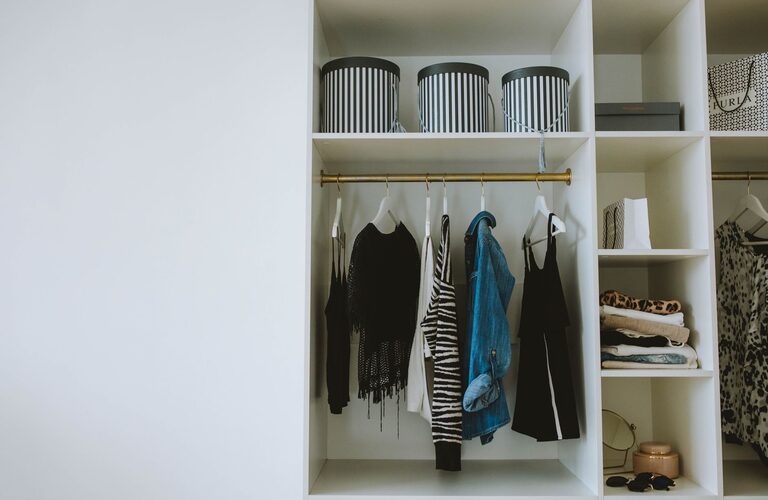
Matching hangers can make a closet look more orderly and help create consistent spacing. Slim hangers may also free up room, especially in a small closet.
Choose hangers that suit the clothing you own. For example:
– Use sturdy hangers for coats and heavier jackets.
– Use shaped hangers for items that may slip or lose their form.
– Use clips for skirts or trousers.
– Fold delicate knits instead of hanging them if they may stretch.
Try to keep a little space between hanging items. Clothes are easier to see, remove, and return when the rod is not packed tightly.
Make Good Use of Shelves and Drawers
Folded clothing should be arranged so you can see as much as possible without disturbing the entire stack. Instead of making very tall piles, use shorter stacks or place clothes vertically in drawers.
A useful folding system includes:
– T-shirts together
– Jeans and casual pants together
– Sweaters in a separate section
– Sleepwear in one drawer or basket
– Workout clothing in another section
Storage bins can help contain small items, but do not use more containers than you need. Too many bins may hide clothing and make it harder to remember what you own. Choose clear or labeled containers when their contents are not easy to see.
Organize Shoes and Accessories
Shoes often create clutter because they are placed wherever there is open floor space. Keep pairs together and use a shoe rack, shelf, or low storage boxes to give them a defined home.
Store frequently worn shoes near the front of the closet. Less-used or seasonal shoes can go on higher shelves or in labeled boxes.
For accessories, try small baskets, drawer dividers, hooks, or trays. Keep similar items together, such as belts in one container and scarves in another. Handbags can be placed upright on a shelf or stored inside larger bags to save space.
Avoid hanging too many items from a single hook. A crowded hook makes accessories difficult to remove and can cause the system to fall apart.
Create a Seasonal Rotation
If your closet is small, rotate clothing by season. Store off-season items in labeled bins, under-bed containers, or a separate storage area.
Before storing seasonal clothing, make sure it is clean and completely dry. Fold items neatly and avoid packing containers too tightly. Add a label that describes the contents, such as “winter sweaters” or “summer clothing.”
When the season changes, review the stored items before returning them to the closet. This is a convenient time to remove clothing that no longer fits your needs.
Leave Space for New Arrivals
A closet that is completely full is difficult to maintain. Leave some open space on shelves and the hanging rod so new items do not immediately create a problem.
You can use a simple one-in, one-out habit. When you add a new item, consider removing or donating something similar that you no longer wear. This works especially well for clothing categories that tend to grow quickly.
Before buying something new, check whether you already own a similar item. A quick closet review can prevent duplicate purchases and help you make more thoughtful choices.
Build a Quick Maintenance Routine
Small, regular habits are easier than occasional major cleanups. Put clothing away as soon as possible instead of leaving it on a chair or the floor.
A simple weekly routine may include:
– Returning misplaced items
– Refolding messy stacks
– Matching shoes
– Emptying pockets
– Moving laundry to the proper place
– Removing items that need repair or cleaning
Set aside a few minutes at the end of the week to reset the closet. These short sessions can prevent clutter from becoming overwhelming.
Make the System Easy to Follow
The best organizing system is one that matches your habits. If you often drop accessories near the door, place a small basket there. If folded clothes are difficult to return to tall stacks, use drawers or shorter piles instead.
Avoid creating a system that requires too many steps. Every item should have a clear home, and that home should be easy to access. When organization is convenient, you are more likely to keep using it.
A tidy closet does not need to look perfect at all times. The goal is to make your belongings easy to find, simple to put away, and useful in your daily life. With regular editing and a few practical storage habits, your closet can stay organized long after the initial cleanup is finished.
About the Author