Busy weeks can make cooking feel like one more task on a long to-do list. Meal prep helps by moving some of that work to a calmer time, such as a weekend afternoon or a quiet evening. You do not need to prepare every meal in advance or follow complicated recipes. A few simple steps can make weekday meals faster and more enjoyable.
The key is to focus on flexible ingredients, easy recipes, and realistic portions. Prepare foods that can be mixed and matched throughout the week instead of making five completely different meals.
Start With a Simple Meal Plan
Before shopping or cooking, spend 10 to 15 minutes planning. Look at your schedule and decide which days will need quick meals, leftovers, or grab-and-go options.
A simple weekly plan might include:
– Two cooked dinners
– One meal made from leftovers
– Two quick lunches
– A few breakfast options
– Easy snacks
Choose recipes that share ingredients. For example, roasted vegetables can be served with rice one day, added to a wrap the next day, and mixed into a pasta dish later in the week. This saves time and helps reduce food waste.
Try not to plan every meal in detail. Leave room for a flexible night when you can use leftovers or prepare something simple from what you already have.
Build Meals From Basic Components
Instead of preparing complete meals, cook a few building blocks. These components can be combined in different ways, keeping meals interesting without requiring extra work.
Useful meal components include:
– Cooked grains such as rice, quinoa, or couscous
– Roasted or steamed vegetables
– Cooked chicken, beans, eggs, or tofu
– Washed salad greens
– Chopped fresh vegetables
– A simple sauce or dressing
– Fresh fruit
– Ready-to-use breakfast ingredients
For example, cooked rice, roasted vegetables, and beans can become a bowl, a burrito filling, or a side dish. Cooked chicken can be used in salads, sandwiches, wraps, or pasta.
Store the components separately when possible. This helps maintain texture and gives you more choices during the week.
Prepare an Easy Breakfast
A planned breakfast can make busy mornings smoother. Choose recipes that can be made in batches and stored in the refrigerator or freezer.
Overnight Oats
Combine rolled oats, milk or a milk alternative, yogurt if desired, and your favorite toppings in small containers. Add fruit, nuts, cinnamon, or seeds before serving. Prepare several jars at once and refrigerate them overnight.
Egg Muffins
Whisk eggs with chopped vegetables, cheese, and cooked meat if desired. Pour the mixture into a greased muffin pan and bake until set. Store the muffins in the refrigerator for quick breakfasts.
Freezer-Friendly Breakfast Burritos
Fill tortillas with scrambled eggs, beans, cooked vegetables, and cheese. Wrap each burrito individually and freeze. Reheat one when you need a filling breakfast with little preparation.
For variety, alternate between two or three breakfast choices rather than making a new recipe every morning.
Make Mix-and-Match Lunches
Lunch is often easier to prepare when each container includes a few different elements. A balanced lunch box can include a main item, vegetables, fruit, and a small snack.
Some easy combinations are:
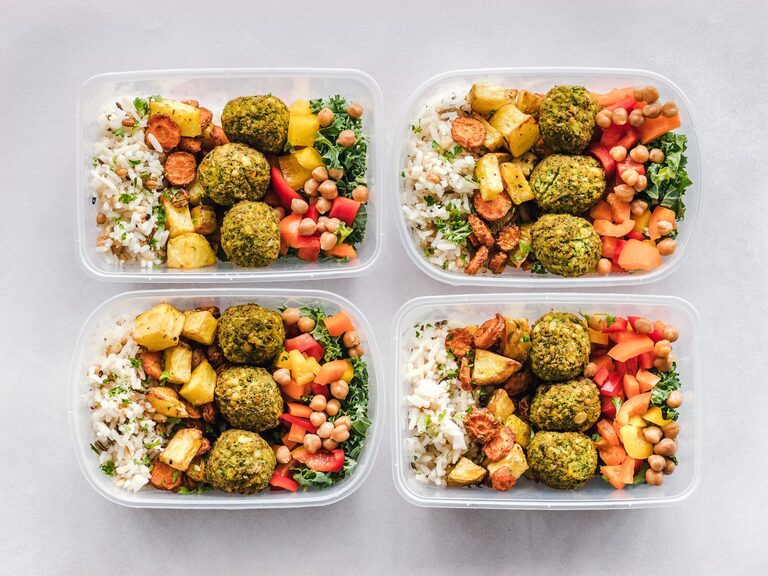
– Rice, chicken, roasted vegetables, and a simple sauce
– Pasta salad with vegetables, beans, and cheese
– Hummus with pita, cucumber, tomatoes, and fruit
– A turkey or vegetable wrap with carrot sticks
– Grain bowls with tofu, greens, and dressing
– Leftover roasted vegetables with boiled eggs and toast
Keep sauces and wet ingredients separate until serving when possible. This prevents salads, wraps, and grain bowls from becoming soggy.
Reusable containers with separate sections can make packing faster. Clear containers are also helpful because you can see what is ready to eat.
Prepare One-Pan Dinners
One-pan meals are useful for busy weeks because they require less hands-on work and create fewer dishes. Combine a protein, vegetables, and a seasoning blend on one baking sheet. Roast until everything is cooked through.
Easy combinations include:
– Chicken, potatoes, and green beans
– Sausage, peppers, onions, and rice
– Tofu, broccoli, carrots, and a savory sauce
– Fish, cherry tomatoes, zucchini, and couscous
– Chickpeas, sweet potatoes, cauliflower, and spices
You can prepare the ingredients in advance and store them in the refrigerator until you are ready to cook. Alternatively, cook a full tray and divide it into portions for several meals.
Keep a Few No-Cook Options Ready
Not every meal needs to involve cooking. No-cook choices are especially helpful on evenings when your schedule changes or your energy is low.
Keep ingredients such as these on hand:
– Whole grain bread or tortillas
– Canned beans or tuna
– Prewashed salad greens
– Cheese or yogurt
– Fresh fruit
– Hummus
– Nut or seed butter
– Precut vegetables
– Cooked deli chicken or other ready-to-eat proteins
With these ingredients, you can make a sandwich, wrap, salad, snack plate, or simple bowl in just a few minutes.
Use the Freezer Strategically
The freezer can extend the life of prepared food and give you more flexibility. Freeze soups, sauces, cooked grains, muffins, burritos, and casseroles in usable portions.
Label containers with the name of the food and the date it was prepared. Flat freezer bags save space and thaw more quickly than deep containers. If you freeze several portions, place a few in the refrigerator the night before so they are ready for the next day.
Some foods are best added after thawing. Fresh greens, crunchy toppings, and sauces can be stored separately and added just before eating.
Create a Short Prep Routine
A successful routine does not have to take an entire day. Start with one hour and focus on the tasks that save the most time.
A basic prep session might look like this:
- Review the week’s schedule.
- Wash and chop vegetables.
- Start one grain or starch.
- Prepare a protein or plant-based main ingredient.
- Mix a dressing or sauce.
- Portion snacks and breakfast items.
- Clean the kitchen and label containers.
Use overlapping cooking time. For example, roast vegetables while rice cooks and prepare a sauce while both are on the stove. This makes the process more efficient without adding complexity.
Keep Meals Interesting
Eating the same meal repeatedly can become boring, even when it is convenient. Add variety with different toppings, sauces, and serving styles.
A basic chicken and vegetable mixture can become:
– A rice bowl with a soy-based sauce
– A salad with a creamy dressing
– A wrap with hummus
– A pasta dish with tomato sauce
– A soup with broth and beans
Fresh herbs, lemon juice, salsa, pickled vegetables, or toasted seeds can also change the flavor of a familiar meal.
Store Food With Care
Let hot food cool briefly before sealing containers, then refrigerate it promptly. Use clean, airtight containers and keep ready-to-eat foods separate from raw ingredients.
Prepare smaller portions if you do not expect to eat everything within a few days. When in doubt, freeze extra servings rather than keeping them in the refrigerator for too long. Reheat food thoroughly and follow the storage instructions for each ingredient.
Make Meal Prep Work for You
The best meal prep routine is one you can repeat. Start with two or three prepared items instead of trying to organize every meal at once. Choose recipes your household already enjoys, use familiar ingredients, and adjust the plan when your week changes.
With a little preparation, busy weekdays can include simple breakfasts, satisfying lunches, and quick dinners without requiring daily cooking from scratch. Focus on flexible ingredients, realistic portions, and a routine that saves time where you need it most.
About the Author